About the project
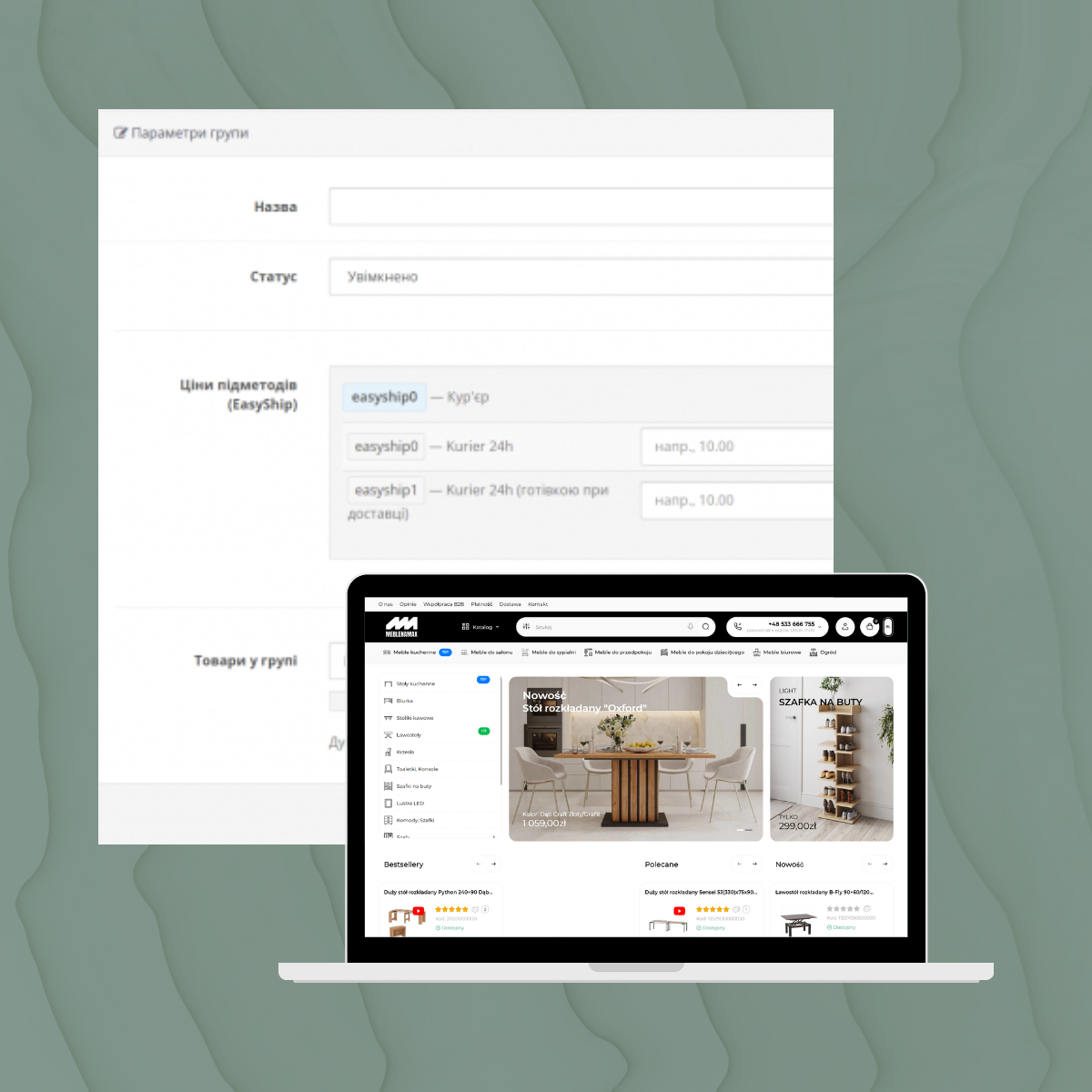
Meble na Max is a furniture e-commerce store for the Polish market built on OpenCart with the UpStore theme. The project involved a series of interconnected technical improvements across the storefront, product pages and checkout, with a focus on making the existing system work correctly with custom business rules rather than rebuilding the store from scratch.
The work covered both frontend UX and backend e-commerce logic, including delivery calculations, payment behaviour, cart interactions, product options and responsive layouts.
Checkout, delivery and cart logic
I implemented custom EasyShip delivery logic for different product groups with fixed shipping costs and additional rules for mixed carts. The solution had to correctly calculate delivery when products from several groups were purchased together, avoid duplicated assignment between shipping groups and remain compatible with the store's OnePageCheckout implementation.
The checkout flow was tested across different cart combinations to make sure that shipping calculations remained predictable and accurate. This required working directly with OpenCart templates, module logic and the existing store configuration.
Custom tipping functionality and payments
I customized the existing order-handling fee functionality and transformed it into a tipping module. Customers could choose predefined percentages of 3%, 5%, 7% or 10%, as well as enter a custom tip amount, while totals updated dynamically without requiring a page reload.
I also configured and tested the Przelewy24 payment module, including BLIK and other supported payment methods. This work included diagnosing customer notifications and order-status behaviour so the payment process worked correctly within the existing checkout flow.
Mobile UX and product-page improvements
I redesigned the mobile filter and sorting controls so they appeared as a coordinated interface on a single row, with unified button dimensions, spacing and styling. The implementation was tested across desktop and mobile devices to ensure that the updated controls remained usable across different viewport sizes.
I also reworked HPMrr product options by moving colour swatches closer to the product image and replacing previous workaround-based styling with a cleaner CSS implementation. Multi-option behaviour was handled for products with several colour variants, including the display of three visible colours followed by a +N indicator when additional options were available.
Product-page and frontend structure
The product-page structure was refined by moving the product title into the upper content area, correcting spacing around the countdown timer and repositioning dynamic pricing information directly below the main price to match the intended storefront hierarchy.
Additional frontend work included fixes to responsive elements, Polish-language labels such as changing “Customer” to “Dane kupującego”, correction of footer email display across devices and adjustments to selectors, styles and JavaScript behaviour throughout the theme.
Technical implementation
The project involved direct work with FTP, OpenCart templates, language files, CSS and JavaScript, as well as multiple modules connected to checkout and product functionality. In total, the work included more than five integrations, custom functions and technical fixes that had to work together inside the existing UpStore-based system.
Result
The store received a more stable and business-specific checkout flow with correct delivery calculations, configurable tipping and properly integrated Przelewy24 payments. At the same time, the mobile catalogue and product pages became more consistent and usable, while legacy workarounds around product options and responsive behaviour were replaced with cleaner implementations that were easier to maintain.